

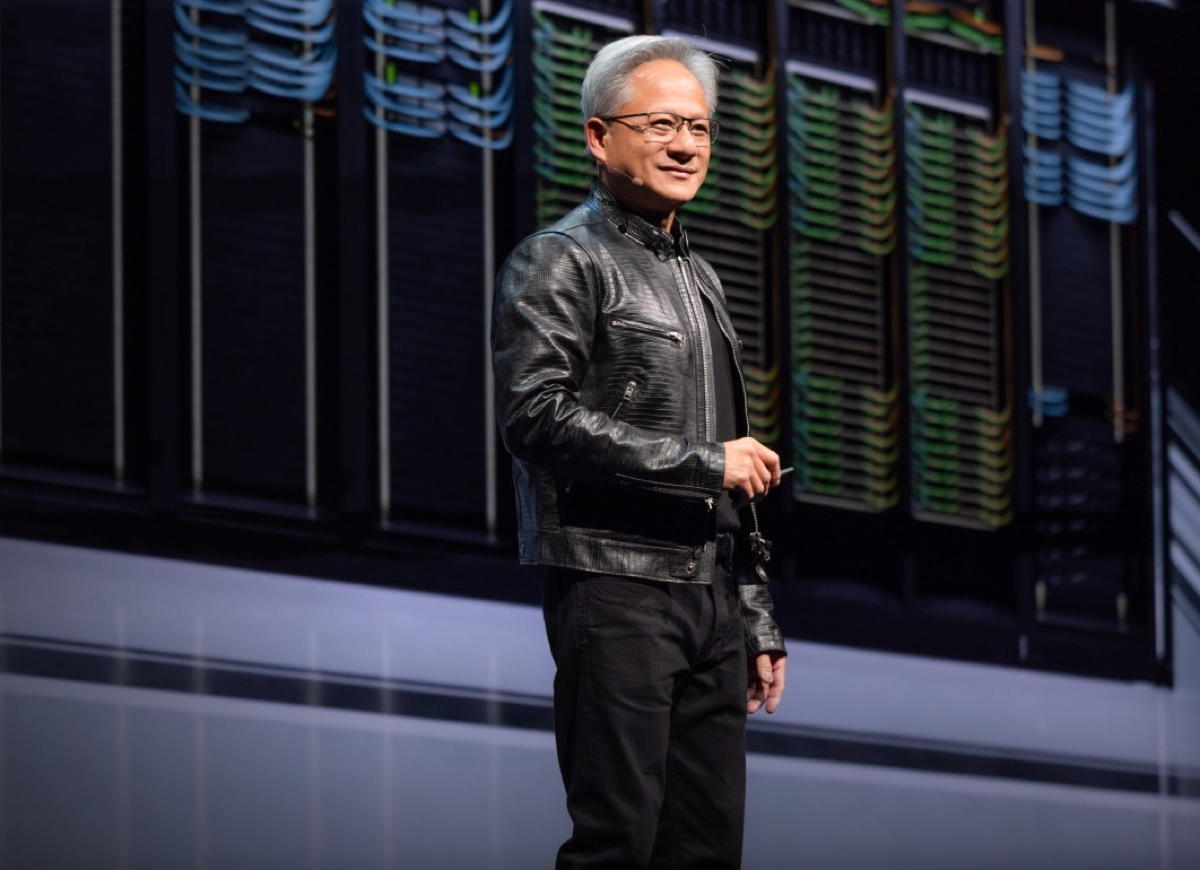
Nvidia chief executive Jensen Huang has clarified that the company will “probably” not invest $100 billion (£75bn) in OpenAI, despite a much smaller $30bn investment as part of a funding round last week. Speaking at a Morgan Stanley conference, Huang explained that the reason behind this cautious stance is the AI start-up’s likely initial public offering (IPO) sometime this year. “I think the opportunity to invest $100 billion in OpenAI is probably not in the cards,” Huang said. He elaborated that because of the expected IPO, “this might be the last time we’ll have the opportunity to invest in a consequential company like this.”
Huang’s comments come after months of intense speculation about the financial and strategic relationship between Nvidia and OpenAI, the two dominant forces in the generative AI boom that has reshaped the technology landscape. OpenAI, the creator of ChatGPT, has become one of the most valuable private companies globally, with valuations soaring past $100 billion in recent funding rounds. Nvidia, the leading supplier of graphics processing units (GPUs) and AI chips, has benefited enormously from the surge in AI development, as its hardware is essential for training and running large language models. The interdependence between the two companies has been a focal point for investors and industry analysts alike.
Huang also addressed Nvidia’s recent $10bn investment in Anthropic, another prominent AI startup and rival to OpenAI. He indicated that this investment was probably “the last” in that company as well, due to Anthropic’s own expected IPO. The remarks suggest that Nvidia is looking to limit its equity exposure in AI startups that are nearing public markets, preferring to treat these investments as strategic partnerships rather than long-term holdings. “Anthropic is also likely to go public, so we view our investment as a one-time opportunity,” Huang added. The strategy reflects a broader trend in the AI industry, where major technology companies are making large, but finite, bets on promising startups.
The backdrop to Huang’s statements is a complex history between Nvidia and OpenAI. In September 2023, Nvidia announced plans to invest up to $100 billion into OpenAI over several years, with the funding tied to the startup’s successive deployments of Nvidia’s chips in data centers. The announcement sparked a flurry of similar investment announcements from other tech giants and drove up stock prices across the AI sector. However, the agreement was never finalized. By January 2024, reports indicated that the deal had stalled, with sources citing disagreements over valuation, governance, and the scale of chip commitments. The current statements by Huang essentially confirm that the mega-deal is off the table.
Changing Economics of AI
The economics of the AI boom have shifted dramatically since the optimistic announcements of 2023. The initial euphoria surrounding generative AI has given way to the sobering realities of building and operating massive data centers required to power the technology. These facilities consume enormous amounts of electricity, water, and other natural resources. For example, a single large-scale AI training run can require enough electricity to power thousands of homes for a day. The cooling systems for these data centers often rely on vast quantities of fresh water, leading to concerns about resource depletion in drought-prone regions. As a result, local communities and environmental groups have increasingly pushed back against new data center constructions, citing rising energy costs and environmental degradation.
Nvidia itself has been at the center of these changes. The company’s stock price has experienced extreme volatility, reflecting both the immense demand for its chips and the uncertainty about the sustainability of that demand. In 2023, Nvidia’s market capitalization briefly exceeded $1 trillion, making it one of the world’s most valuable companies. However, concerns about a potential bubble in AI investments have led to periodic sell-offs. Huang’s cautious approach to investing in OpenAI may be partly driven by a desire to avoid overexposure to a single startup, especially one that could face regulatory or public relations challenges as it grows.
Investment Landscape and IPO Speculation
The AI investment landscape is evolving rapidly. Venture capital funding for AI startups reached record levels in 2023, but the pace has slowed in 2024 as investors become more selective. Many investors are now focusing on companies with clear paths to revenue and profitability, rather than those relying solely on hype. OpenAI, despite its popularity, has faced scrutiny over its business model. The company generates significant revenue from ChatGPT subscriptions and API access, but its costs—particularly for compute resources—are enormous. An IPO would provide OpenAI with fresh capital and allow early investors to cash out, but it would also subject the company to quarterly earnings scrutiny and greater regulatory oversight.
Similarly, Anthropic, which was founded by former OpenAI employees, has positioned itself as a more safety-focused alternative. The company has raised substantial funding from investors including Google, Salesforce, and now Nvidia. Its expected IPO is seen as a key event for the AI sector. Huang’s comments about both startups suggest that Nvidia views its role as a strategic partner rather than a permanent financial backer. By providing chips and some funding, Nvidia ensures that its hardware remains the default choice for leading AI labs, while avoiding the risks associated with long-term equity holding in potentially overvalued companies.
Broader Implications for Nvidia’s Strategy
Nvidia’s strategy goes beyond just chip sales. The company has been building a comprehensive ecosystem around its hardware, including software platforms like CUDA, networking technologies, and data center design services. By investing in AI startups, Nvidia gains early insights into next-generation model requirements and can tailor its products accordingly. However, the decision to cap investments at relatively modest levels indicates a belief that the AI market will become more commoditized over time, reducing the need for exclusive partnerships. Huang has often spoken about the long-term potential of AI, predicting that it will transform every industry. But he also acknowledges that the current boom may be unsustainable in its intensity.
The environmental impact of AI data centers is becoming a critical issue. In areas like Northern Virginia, which hosts the largest concentration of data centers in the world, residents have complained about noise, water usage, and rising electricity bills. Some local governments have imposed moratoriums on new data center construction. Nvidia has responded by developing more energy-efficient chips, such as the Grace Hopper superchip, and by promoting liquid cooling technologies. However, the sheer scale of AI workloads means that even efficiency gains may be offset by increased demand. The company’s caution about further large investments may reflect a desire to see how these environmental and regulatory issues play out before committing more capital.
In the context of the broader tech industry, the relationship between chipmakers and AI startups is analogous to the earlier era of the internet boom, where companies like Cisco and Intel supplied networking and processing equipment to dot-com startups. Many of those startups failed, but the infrastructure providers survived and thrived. Nvidia appears to be following a similar playbook, maintaining a neutral stance that allows it to supply all AI companies while not being overly tied to any single one. This position also protects Nvidia from potential antitrust scrutiny, as regulators worldwide are increasingly examining the dominance of a few companies in the AI supply chain.
The remarks by Huang at the Morgan Stanley conference were delivered to an audience of institutional investors, who closely watch Nvidia’s every move. The stock market reaction to his comments was muted, suggesting that investors had already priced in the diminished likelihood of a massive OpenAI investment. Instead, attention is turning to Nvidia’s upcoming earnings report and its guidance for the rest of the year. Analysts expect continued strong demand for Nvidia’s Hopper and Blackwell chips, but also anticipate margin pressure as competition from AMD and Intel intensifies. The AI chip market is becoming increasingly crowded, with startups like Cerebras and Graphcore also vying for a share. Nvidia’s ability to maintain its technological lead will be crucial for its long-term success.
OpenAI, for its part, has continued to innovate, releasing new versions of ChatGPT and expanding its enterprise offerings. The company has also been exploring hardware development, with rumors that it might design its own chips to reduce reliance on Nvidia. Such a move would be a direct challenge to Nvidia’s dominance, but it remains uncertain whether OpenAI can match Nvidia’s engineering expertise and manufacturing scale. The potential IPO would give OpenAI the financial resources to invest in chip design, but it would also expose the company to the constant pressure of quarterly earnings. Huang’s pragmatism about not over-investing may be well-founded; history shows that hardware startups rarely succeed against incumbents with decades of experience and massive R&D budgets.
As the AI industry matures, the dynamics between hardware and software companies will continue to evolve. Nvidia’s decision to limit its financial exposure to OpenAI and Anthropic is a strategic move that balances opportunity with risk. By keeping its options open and maintaining arm’s-length relationships, Nvidia can adapt to whatever future unfolds. Whether the AI boom eventually leads to a bubble or a sustainable transformation, Nvidia is positioned to remain a key beneficiary, as long as it continues to innovate and manage its investments wisely. The coming months will be crucial as both OpenAI and Anthropic move closer to their IPOs, and as the broader economy adjusts to the new realities of AI-driven computing.
Source: Silicon UK News